


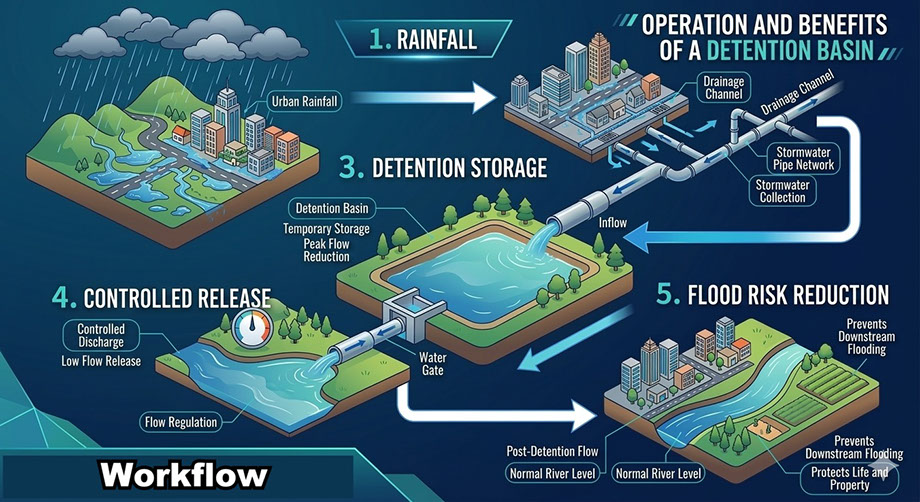
Step-by-Step Working Process
1. Rainfall Occurs
During heavy rain, water falls on roads, rooftops, parking lots, and other hard surfaces in the city. Because these surfaces cannot absorb water, large amounts of rainwater quickly flow into storm drains.
2. Stormwater Flows into the Drainage System
Rainwater is carried through drainage pipes, roadside gutters, and channels toward the detention basin. This helps collect water from a large urban area.
3. Temporary Storage in the Detention Basin
The detention basin temporarily stores excess stormwater when rainfall is intense. Instead of overwhelming the drainage system all at once, the basin holds the water for a short period of time.
4. Sediment Settling and Water Level Control
While the water is stored, sediments and debris settle at the bottom of the basin. The basin is designed with a controlled outlet structure (such as a small pipe, orifice, or weir) to manage how quickly water leaves the basin.
5. Gradual Release After the Storm
After rainfall decreases, the stored water is slowly released through the outlet system into nearby rivers or drainage channels. This prevents sudden surges of water that could cause downstream flooding.
6. Return to Normal Conditions
Once the water level drops, the basin returns to its normal state. Many detention basins are designed as parks, wetlands, or green spaces when they are not storing stormwater.
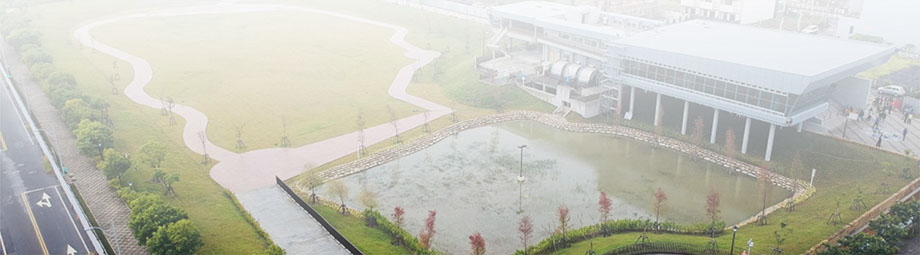

Changhua County Ming Lun junior high school, Taiwan.
Ming Lun Junior High School 2026 Cyber Fair