


Principles, Planning Considerations, and International Examples of Detention Basins
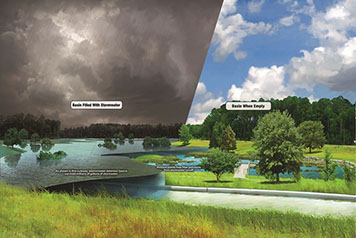
A detention basin is a common urban flood control facility designed to temporarily store large amounts of rainwater during heavy storms or typhoons and release it slowly after the rainfall ends. The basic principle of a detention basin is “store first, then release slowly.” By controlling the speed of water flow, it helps reduce the risk of flooding in urban areas.
During heavy rainfall, stormwater from nearby roads, rooftops, and paved surfaces flows into drainage systems and is directed into the detention basin. Instead of allowing a large volume of water to immediately enter rivers or drainage channels, the basin temporarily stores the excess water. After the rain subsides, the water is gradually discharged through specially designed outlets or control structures at the bottom of the basin. This controlled release ensures that downstream rivers and drainage systems are not overwhelmed by sudden increases in water flow, thereby reducing the likelihood of urban flooding.
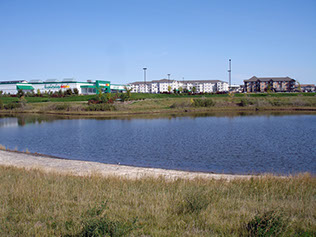
In addition to flood control, detention basins can also provide environmental benefits. When rainwater is stored in the basin, sediments and pollutants can settle at the bottom, which helps improve water quality before it is released. Many modern cities also integrate detention basins with parks and green spaces. During normal weather conditions, these areas can serve as recreational parks or open spaces for the community, while during heavy rainfall they function as temporary water storage areas that help protect nearby neighborhoods from flooding.
When planning and designing a detention basin, several important factors must be considered. The first is storage capacity, which must be calculated based on the size of the drainage area and the expected rainfall intensity. Engineers often use design standards such as a “100-year storm event” to estimate the amount of water the basin should be able to store. Another important factor is the outlet control system, such as pipes, orifices, or overflow weirs, which regulate the speed at which water is released. Safety and maintenance are also critical considerations. Designers must ensure that the basin can safely handle extreme rainfall without overflowing, and sediment accumulation must be managed through regular cleaning and maintenance. In addition, planners must consider surrounding land use, groundwater levels, and ecological impacts to ensure that the facility is both safe and environmentally sustainable.
Detention basins have been widely used in many countries as part of urban flood management systems. For example, Harris County in Texas, United States, has constructed dozens of large detention basins to store floodwater during heavy storms. These basins have a combined storage capacity of billions of gallons and play an important role in reducing flood risks in the Houston metropolitan area. In Essex County in the United Kingdom, detention basins are often integrated into parks or open spaces. These basins can temporarily store thousands of cubic meters of rainwater during storms and slowly release it afterward, helping protect nearby communities from flooding.
These international examples show that detention basins are not only effective flood control structures but can also be integrated with urban landscapes and ecological environments. As climate change continues to increase the frequency and intensity of extreme rainfall events, detention basins have become an important part of sustainable urban planning and water management strategies around the world.
References
Wikipedia – Detention Basin
https://en.wikipedia.org/wiki/Detention_basin
Harris County Flood Control District – Stormwater Detention: How it Works
https://www.hcfcd.org/Resources/Storm-Center/Preparing-for-a-Storm/Stormwater-Detention-How-it-Works
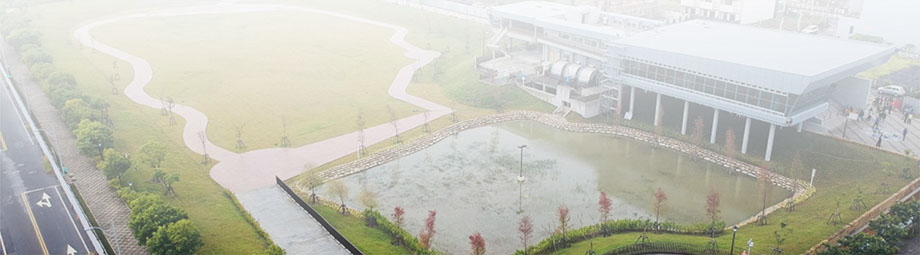

Changhua County Ming Lun junior high school, Taiwan.
Ming Lun Junior High School 2026 Cyber Fair