


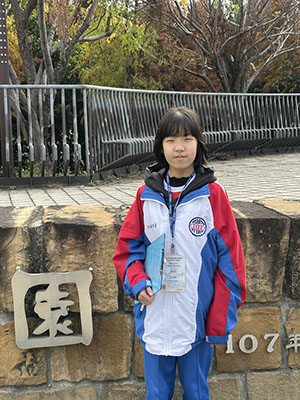
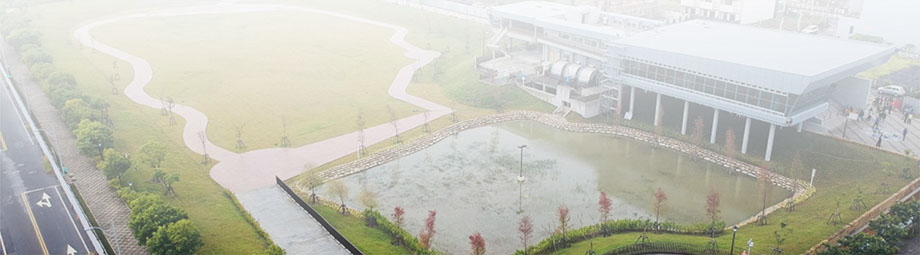
Under the guidance of our teacher, our group visited Yuanlin Park and Longdeng Park to explore the environmental functions of detention basins. Through observation and explanation, I gained a clearer understanding of their principles and functions. Normally, these basins serve as green spaces for recreation and exercise while enhancing the landscape. During heavy rain, they temporarily store water, reduce drainage pressure, lower flood risks, and protect nearby residents.
We also explained our research to park visitors and conducted surveys to understand their awareness. Some initially saw the parks as ordinary recreational areas, but after our explanation, they realized their critical role in disaster prevention. This visit not only deepened my knowledge of flood control facilities but also strengthened my teamwork and communication skills, showing me that environmental protection relies on combining expertise with public understanding.
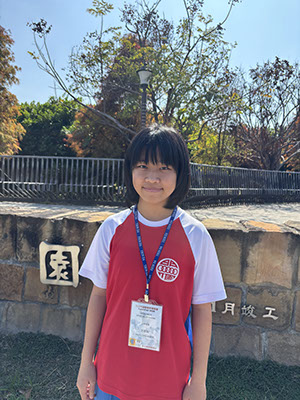
I wanted to learn how detention basins operate during heavy rain and understand public perception of Yuanlin and Longdeng Parks, so I followed our teacher for a field visit and distributed surveys.
On-site, I observed how water collects and is temporarily stored, then diverted through pumping and drainage systems to reduce urban flooding pressure. The facilities also include trash barriers and conveyor belts to remove debris and maintain smooth drainage. I realized that if people litter less, flood control efficiency and environmental quality could improve even more.
During the surveys, some visitors only saw the parks as recreational spaces, while others mentioned news reports of typhoon-related water activities, highlighting the importance of safety management. Some suggested adding interpretive signs to raise public disaster awareness. This visit helped me understand the role of detention basins in urban flood control and their connection to residents’ lives. Flood prevention is not just engineering—it requires public understanding and cooperation.
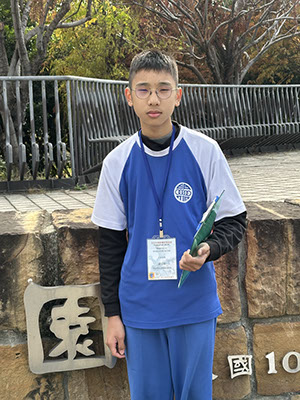
Extreme weather increases disasters such as cold damage, floods, and droughts. In central Taiwan, rain is concentrated in spring and summer, and heavy rain often causes flooding. I have seen news reports of severe flooding in low-lying areas of Yuanlin, affecting residents’ daily lives.
To address flooding, authorities built the Longdeng and Yuanlin Parks as detention basins. Longdeng Park can hold 47,000 tons of water (about 19 standard swimming pools), and Yuanlin Park 31,490 cubic meters (about 12.5 pools). Our teacher also explained the water storage design, drainage process, trash filtration, and diesel generator backup, showing me that flood control requires multiple systems working together.
This visit helped me understand that tackling heavy rainfall and flooding demands thoughtful design and management to protect residents’ safety.
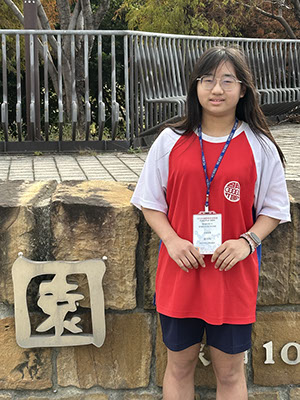
During our visit to Yuanlin and Longdeng Parks, I discovered that Longdeng Park, covering 8,000 ping, not only provides recreation but also stores water. I hadn’t noticed the pumping and filtration system inside the detention basin before. With the teacher’s explanation, I learned how rainwater is pumped, filtered, and discharged.
Yuanlin Park can hold about 12.5 swimming pools of water, and Longdeng Park about 19–25 pools, which was impressive. Yuanlin Park also serves as an emergency shelter for up to 500 people, while Longdeng Park has sports courts and walking trails. Conducting surveys trained our courage; even though few people participated, simply stepping forward to distribute questionnaires was very rewarding.
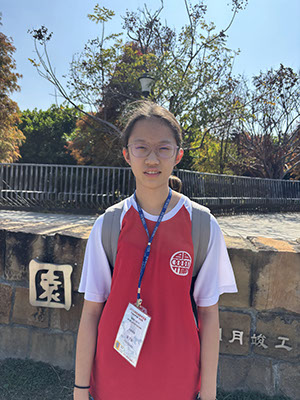
For the International School Web Expo, we studied the flood control and recreational functions of Yuanlin and Longdeng Parks. Through data collection, field visits, and surveys, we aimed to raise awareness of the importance of urban detention basins.
Our teacher showed us how the basins temporarily store rainwater, slow drainage, and reduce flood risks, and we observed the parks’ ecological and recreational features. Survey results indicated public confidence in the flood prevention functions and appreciation for the park design. This research improved my teamwork skills and deepened my understanding of the value of integrating public infrastructure with disaster prevention and quality of life.
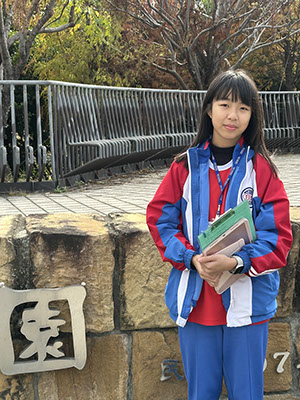
Attending the flood control facility visit helped me rethink the connection between “safety” and daily life. We first distributed surveys to passersby. Initially shy, we encouraged each other and completed the task, realizing that difficulties often stem from not taking the first step.
Observing the drainage system, I was most impressed by how rainwater enters the detention basin, is pumped and filtered, and finally discharged. These details, often overlooked, are crucial for protecting lives. Longdeng Park can store the equivalent of 19 swimming pools, ensuring safety during storms. This visit reminded me that disaster prevention is not just a slogan—it starts with understanding the environment and respecting safety.
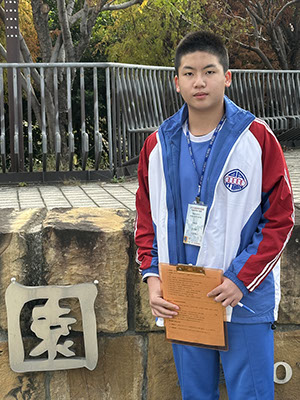
We visited the detention basins at Yuanlin and Longdeng Parks. During the teacher-led tour, I learned that these parks serve as recreational spaces normally, but during heavy rain, they temporarily store water to reduce urban flooding. The pumping and other facilities blend seamlessly into the landscape, making the park both practical and aesthetically pleasing, with well-planned paths, lawns, and recreation areas for safe use.
This visit taught me that urban planning must balance environment, ecology, and safety. When functionality and beauty are combined, public spaces become more inviting. Overall, I gained a new understanding of flood control and public infrastructure and learned to observe the thoughtful details hidden in our city.
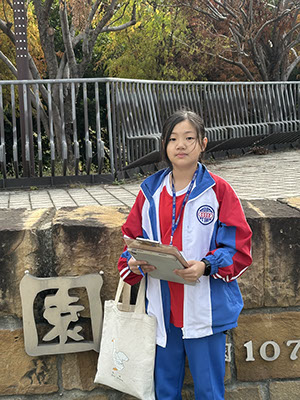
When I previously exercised or picnicked, I noticed that Yuanlin and Longdeng Parks have sunken designs but didn’t realize this was for flood control. After our teacher’s explanation, I understood how rainwater is temporarily stored and gradually released to reduce flooding.
While conducting surveys, I discovered that many visitors were unaware of the parks’ flood prevention function; our explanations helped them understand. I realized that important public facilities are often around us, but we need to observe and share knowledge. This visit helped me feel the close connection between city planning and daily life and taught me to pay more attention to and care for the environment.

Changhua County Ming Lun junior high school, Taiwan.
Ming Lun Junior High School 2026 Cyber Fair